After changing careers to become a teacher, I’ve developed a real respect for the learning process—especially the idea that educators never stop learning. Even while I’m finishing my final year of university, I already see how essential professional development is, not only for my own growth but also for my future students.
I’ve learned that strong teaching doesn’t just come from “knowing the material.” It comes from continually expanding your professional knowledge, staying current, and being willing to try new ideas in the classroom. My placements in Grade 4/5, Grade 6, and Grade 8 have shown me that the most effective teachers are curious, reflective, and committed to evolving their practice. That’s the kind of teacher I want to be—one who keeps learning so students get lessons that are engaging, current, and meaningful.
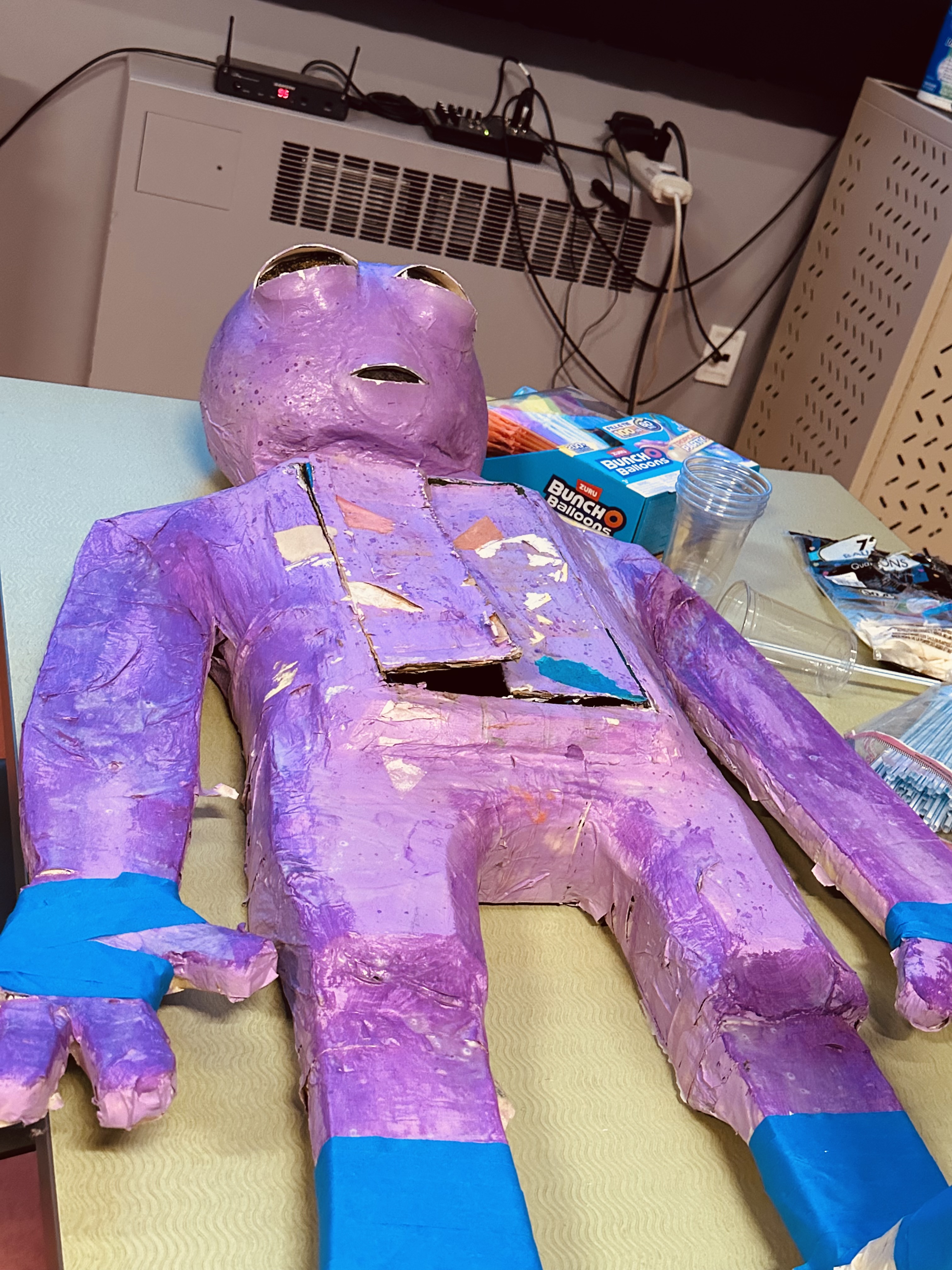
Attending the STAO “Ignites the North” 2025 Conference in Sudbury strengthened this mindset even more. The conference gave me practical, classroom-ready science approaches that I can use directly in my future teaching. Two sessions in particular expanded what I know how to do: one introduced a paper mâché human body model with removable organs, showing how hands-on activities help students learn through tactile exploration. Another workshop involved building a Scribble Bot using everyday materials, demonstrating how the engineering design process—prototyping, testing, iteration, and problem-solving—can be taught affordably and accessibly.
Experiences like these confirm how valuable ongoing professional learning is. I plan to keep participating in professional development opportunities, collaborating with other educators, and seeking out new STEM approaches so my practice continues to grow alongside the needs of my students.
Artifacts
Artifact 1: Paper Mâché Person with Removable Organs
This artifact represents a hands-on science workshop focused on using tactile models to teach human organ systems. It shows a classroom-ready strategy that supports memory, engagement, and conceptual understanding.
This is photo of the paper mâché human body model with removable organs, demonstrating a hands-on approach to teaching the Grade 5 Life Systems strand (Human Health and Body Systems).
Artifact 2: Scribble Bot Engineering Activity
This artifact documents my participation in a STEM workshop that taught engineering and design thinking. It represents ongoing professional learning connected to creativity, iterative testing, and problem-solving in science and technology, and aligns with the Grade 5 Structures and Mechanisms strand.
Scribble Bot video — A video of my Scribble Bot in action, demonstrating how forces and mechanical systems work together in this hands-on STEM activity.
 Shauna McCabe