Professional knowledge shapes every teaching decision I make. Understanding curriculum, learning theory, and how students build understanding helps me design lessons that are accurate, relevant, and engaging. My teaching gets stronger when I use research-based approaches that let students see themselves, their identities, and their ways of knowing reflected in the classroom.
At the STAO “Ignites the North” 2025 Conference, I expanded my knowledge of science and STEM teaching. The “Beading is Coding” workshop showed how logic structures like sequencing, repetition, pattern recognition, and debugging are built right into beadwork. This opened my eyes to how STEM can be taught through culturally relevant ways of knowing, instead of only relying on digital coding platforms. Another session explored how to integrate the UN Sustainable Development Goals (SDGs) and design thinking into science learning, reinforcing that STEM can be a way to encourage creativity, inquiry, and global citizenship.
Together, these experiences strengthened my professional knowledge by deepening my understanding of how STEM instruction can be inclusive, culturally meaningful, and connected to real-world problem-solving.
Artifacts
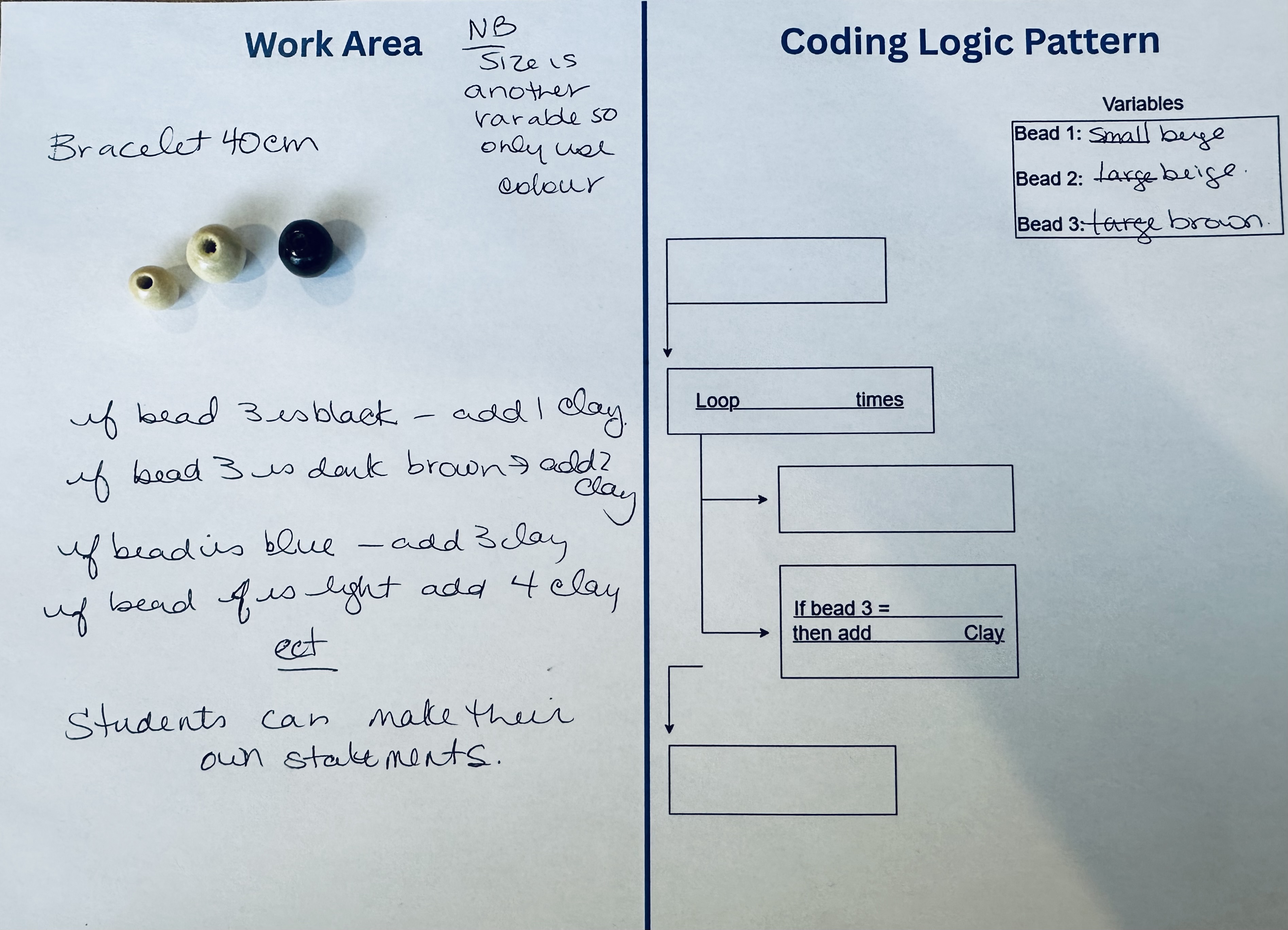
“Beading is Coding” Workshop Materials
This artifact documents my participation in a STEM workshop that showed how computing skills like sequencing, pattern recognition, and debugging are embedded within beadwork. It represents professional learning about authentically integrating Indigenous knowledge into coding instruction and expanding the ways students can understand STEM concepts.
This is a photo of completed “Beading is Coding” worksheet showing how beading practices connect to computational thinking and coding expectations in the science curriculum.
SDG & Design Thinking Workshop Slide
This artifact captures a workshop presentation focused on using the UN Sustainable Development Goals and design thinking as a framework for science learning. It represents professional knowledge related to inquiry-based learning and global citizenship, highlighting science as problem-solving rather than just memorization.
This is a photo or screenshot of the SDG & Design Thinking workshop presentation slide, demonstrating how global issues can be integrated into STEM education.

 Shauna McCabe